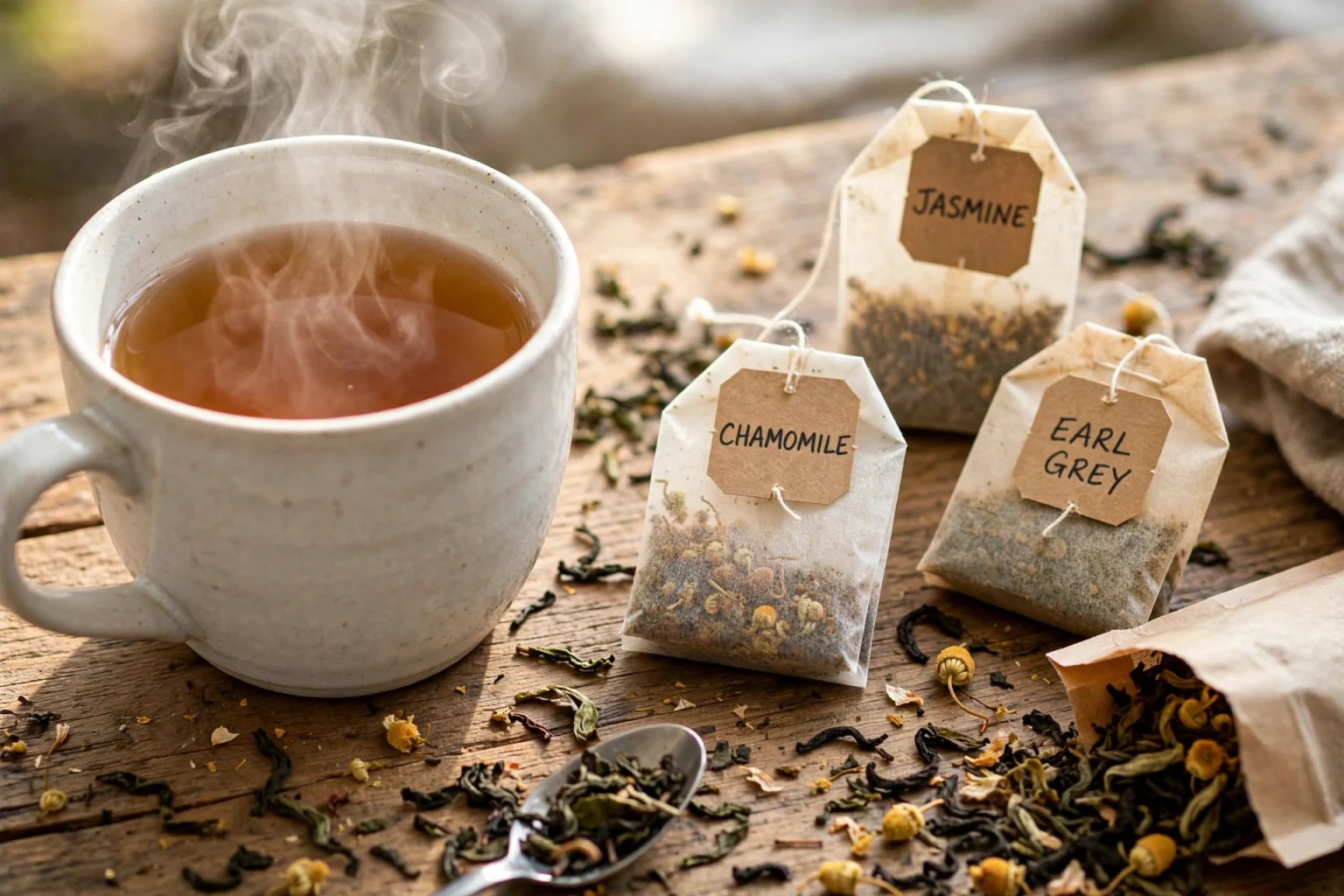

Tea feels like one of the simplest, healthiest rituals in the kitchen: boil water, steep, sip. But a new brewing study covering 28 brands suggests the bag itself deserves a closer look. Researchers found that plastic tea bags released between 555 and 2,498 microplastic particles per cup, while loose tea released just 0.3 to 2.4 particles — a difference of roughly a thousandfold.
The findings, published in a peer-reviewed journal and summarised by Nature, add tea to the growing list of everyday products being examined for microplastic shedding, alongside bottled water, food packaging and synthetic clothing.
Not All Tea Bags Are the Same
The crucial detail is material. Many premium and pyramid-style tea bags are made not from paper but from food-grade plastics such as nylon or PET, chosen because they hold their shape in hot water and allow leaves room to expand. Traditional paper bags, by contrast, shed far fewer particles, and loose leaf tea — brewed in a metal infuser or a simple teapot — shed almost none at all.
Hot water is part of the story. Brewing temperatures accelerate the release of tiny particles from plastic surfaces, which is why a product designed to sit in near-boiling water is a particular focus for researchers. The study brewed teas under realistic conditions, aiming to reflect what actually ends up in a normal cup rather than an exaggerated laboratory scenario.
Should Tea Drinkers Be Worried?
Scientists are careful here, and readers should be too. Detecting particles is not the same as proving harm. The health effects of ingesting microplastics at these levels are still being investigated, and major food safety bodies have generally concluded that current evidence does not establish a clear risk to consumers — while also calling for more research and less unnecessary plastic in food contact materials.
What the study does provide is a simple, practical comparison. If two brewing methods deliver the same cup of tea, and one releases hundreds or thousands of times more plastic particles than the other, many drinkers will reasonably prefer the lower-exposure option — no alarm required. It is the same common-sense approach behind paying attention to everyday health signals early, a theme in our guide to signs your body may need professional attention.
Easy Ways to Brew With Less Plastic
Switching is unusually easy, which is part of why this research has attracted so much attention:
- Try loose leaf tea with a reusable stainless-steel infuser or a traditional teapot. The flavour is often better, because whole leaves have room to unfurl.
- Check the bag material. Some brands now clearly label plastic-free, paper or compostable bags. If a silky pyramid bag feels like fabric, it is often plastic.
- Use a French press or strainer for herbal blends and rooibos, which brew just as well without any bag.
- Do not squeeze plastic bags hard against the cup, and avoid re-steeping the same plastic bag repeatedly.
A Bigger Conversation About Everyday Plastics
The tea findings land in a wider moment of scrutiny. Researchers are measuring microplastics in drinking water, seafood, salt and even indoor air, and manufacturers are responding with plastic-free packaging claims that vary in reliability. For tea companies, the pressure is likely to grow: few products trade so heavily on purity, nature and wellbeing as tea does, and few revelations sit quite so awkwardly beside that image.
Regulators, meanwhile, face the slower work of standardising how particles are counted — one reason published numbers can differ sharply between studies. The World Health Organization has called for further research into microplastics and a crackdown on plastic pollution, while emphasising that the bigger, proven risks in drinking water remain microbial and chemical contamination.
For now, the takeaway for tea lovers is reassuringly modest. You do not need to give up your morning cup, and there is no need for panic. But if you brew daily — and especially if you drink several cups a day — choosing loose leaf or verified plastic-free bags is a small, inexpensive change that dramatically reduces what else ends up in the cup. Sometimes, as our coverage of small habit changes and the brain has noted, the simplest swaps are the ones that stick.