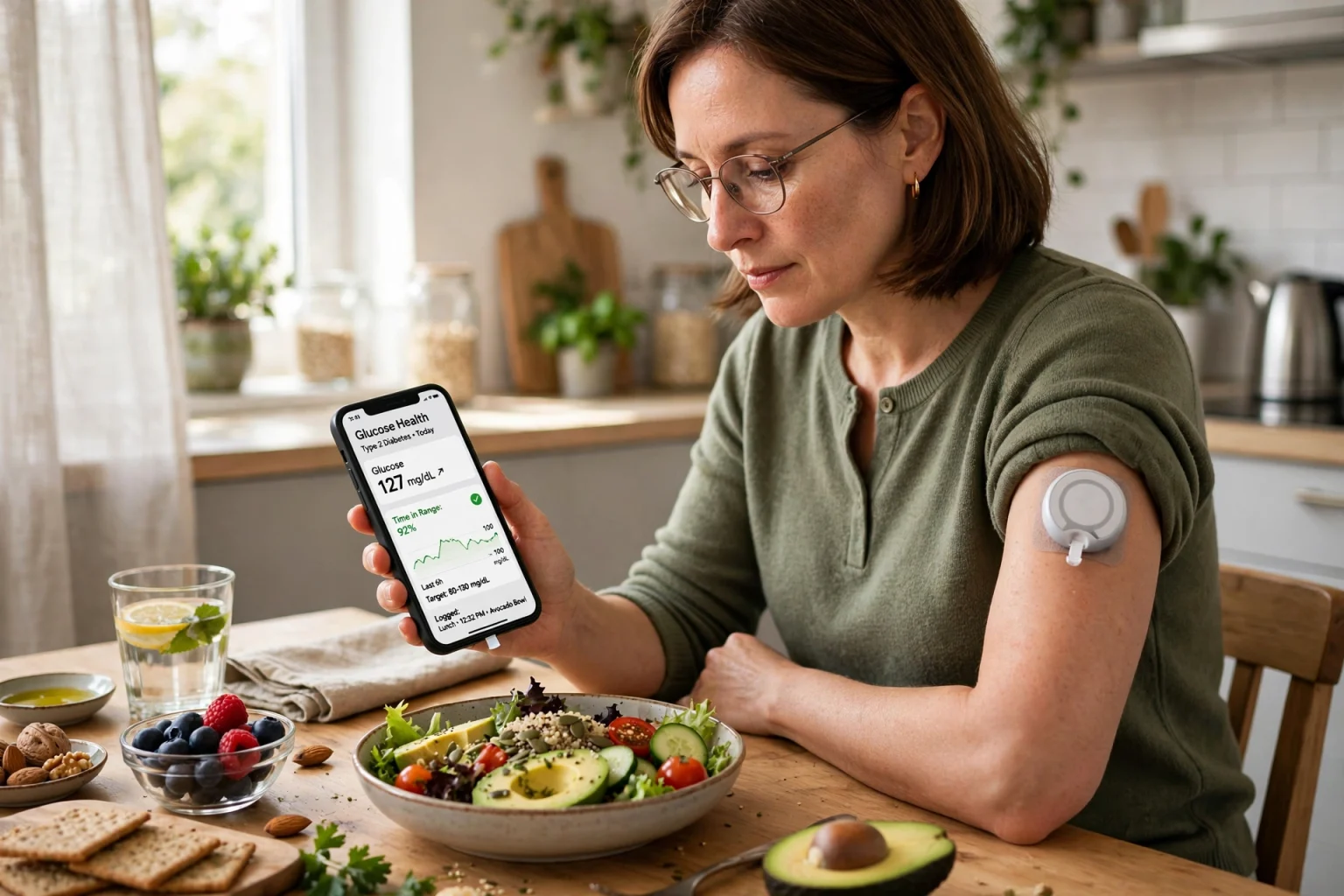

For millions of adults living with type 2 diabetes, keeping blood sugar in a healthy range is a daily balancing act shaped by food, activity, stress, sleep and medication. A large clinical trial published in the New England Journal of Medicine now suggests that a tool long associated with insulin users — the continuous glucose monitor — can make that balancing act considerably easier for people who do not use insulin at all.
According to the trial, adults with type 2 diabetes who wore a continuous glucose monitor spent approximately five more hours each day in their target blood sugar range than those relying on conventional monitoring. That is not a marginal gain. Five extra hours in range, day after day, can mean fewer energy crashes, steadier moods and, over time, a lower risk of the complications that make diabetes such a serious long-term condition.
What the Trial Actually Found
Continuous glucose monitors, often called CGMs, are small wearable sensors that track glucose levels throughout the day and night, sending readings to a phone or receiver every few minutes. Instead of a handful of finger-prick checks, users and their clinicians can see the full picture: the rise after breakfast, the dip during a walk, and the pattern that repeats every evening.
The study is described as the largest clinical trial of its kind for this group of patients. Its central finding — roughly five additional hours a day in the target range for people not on insulin — matters because this group has historically had less access to the technology. Coverage and clinical guidance have tended to prioritise people using insulin, leaving many others to manage with occasional test strips and quarterly lab results. Reporting on the trial from the University of Colorado Anschutz Medical Campus highlights how consistent feedback helped participants adjust everyday habits in real time.
Why Feedback Changes Behaviour
Diabetes management is, in large part, an information problem. A person may know in theory that a large plate of white rice will raise their glucose, but seeing the curve climb on a screen minutes after a meal turns abstract advice into personal evidence. The same applies in reverse: watching a brisk ten-minute walk blunt a post-meal spike is powerful motivation to repeat the behaviour.
Clinicians say this feedback loop is the real story behind the numbers. The sensor itself does not lower blood sugar; the decisions it informs do. Smaller portions, different food pairings, better-timed medication and more regular movement all become easier to sustain when their effects are visible. That principle also runs through broader preventive care, as our coverage of why regular health checkups matter for working adults has explored — early, regular data tends to beat occasional guesswork.
Who Could Benefit Most?
The findings are most relevant for adults whose type 2 diabetes is managed with diet, activity and oral medication, and who struggle to keep their readings stable despite genuine effort. They may also help people newly diagnosed, when habits are still forming and understanding personal glucose patterns can shape a lifetime of management.
There are caveats. Sensors cost money, coverage varies widely, and not everyone wants a device attached to their arm around the clock. Skin irritation, alarm fatigue and the stress of constant data are real downsides that clinicians should discuss honestly. The technology also works best when paired with professional support — a stream of numbers without guidance can overwhelm rather than empower.
A Shift in How Diabetes Care Is Delivered
Still, the direction of travel is clear. As sensors become smaller, cheaper and easier to wear, the distinction between monitoring for insulin users and everyone else is likely to fade. Guidelines evolve slowly, but large, well-designed trials published in leading journals tend to accelerate change, influencing both prescribing habits and insurance decisions.
For readers managing type 2 diabetes, the practical takeaway is to start a conversation. Ask your clinician whether a short trial period with a monitor could reveal patterns your current routine is missing. Pair that discussion with the fundamentals that never change: balanced meals, regular movement, good sleep and consistent medication. Readers interested in how everyday habits shape long-term health may also enjoy our look at what a week without social media does to the brain.
Five more hours a day in a healthy range will not transform diabetes care overnight. But multiplied across weeks, months and millions of people, it represents steadier days today — and potentially healthier years ahead.