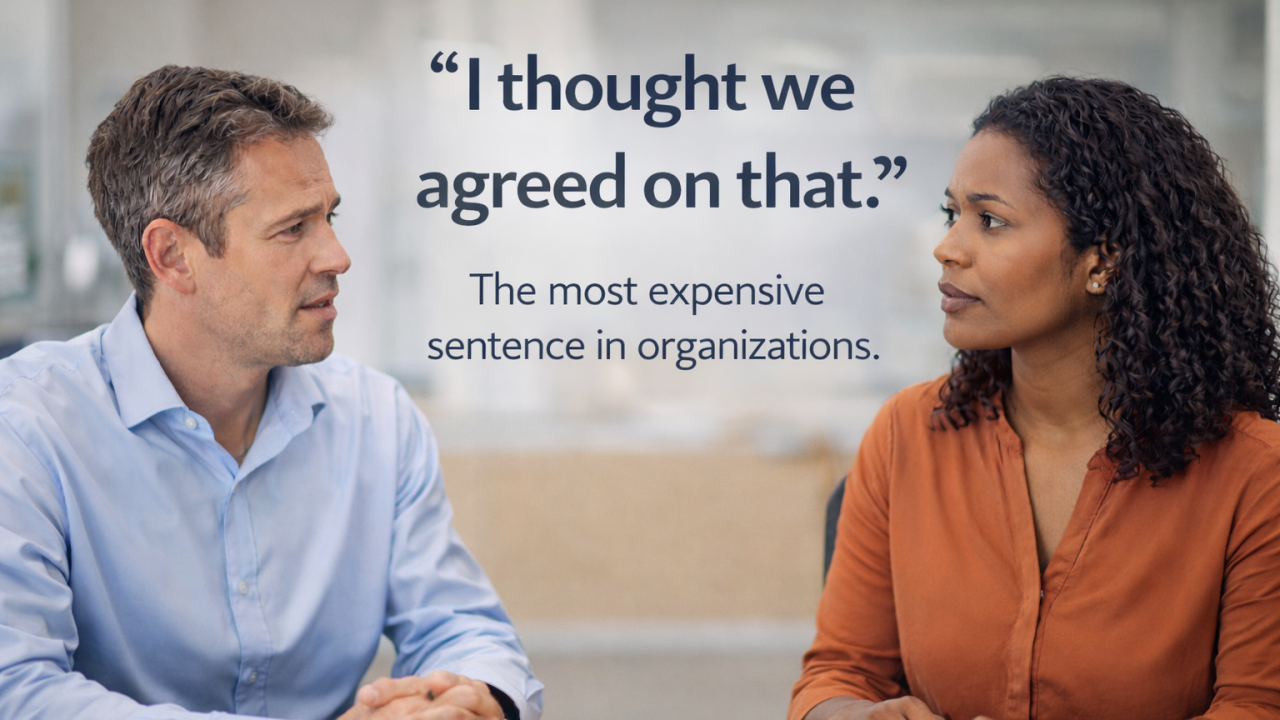

Speed in business is not about moving fast. It is about moving without hesitation.
Hesitation comes from confusion. Confusion comes from unclear ownership.
When no one knows who is responsible, work slows down. Decisions stall. Tasks sit unfinished.
Clear ownership fixes that.
The Problem with Shared Responsibility
Everyone Owns It, So No One Does
Teams often assign work to groups. It sounds collaborative. It creates delay.
If two people think they are responsible, both wait. If five people are involved, no one acts first.
Harvard Business Review reports that unclear accountability is one of the top causes of project delays in organisations.
One manager shared a real example. “We had three people reviewing the same approval. Each thought someone else would sign off. It sat for three days.”
The task itself took five minutes.
Action Step
Assign one owner per task. One name. No exceptions.
Ownership Creates Momentum
Decisions Move Faster
When ownership is clear, decisions happen faster.
The owner does not wait for consensus. They gather input, then act.
This removes bottlenecks.
A team leader once said, “Once we gave one person full ownership, the project timeline cut in half. Not because they worked faster, but because they stopped waiting.”
Ownership replaces delay with action.
Clear Ownership Reduces Meetings
Less Talking, More Doing
Unclear ownership creates meetings.
People meet to decide who decides. They meet to clarify responsibility. They meet to follow up.
Atlassian reports that employees spend an average of 31 hours per month in meetings that lack clear outcomes.
Clear ownership removes the need for many of these discussions.
When roles are defined, people act without asking for permission.
Action Step
Review your calendar. Identify meetings that exist only to clarify responsibility. Replace them with written ownership rules.
Ownership Improves Accountability
Results Become Visible
When ownership is clear, performance becomes measurable.
You know who is responsible for success. You know who is responsible for failure.
This is not about blame. It is about clarity.
One operations lead shared, “We stopped saying ‘the team missed it.’ We started saying, ‘this process owner missed it.’ Fixing it became easier.”
Clear ownership turns vague problems into specific ones.
Ownership Reduces Rework
Fewer Errors, Fewer Fixes
When tasks pass between multiple people without ownership, errors increase.
Gartner reports that poor process clarity can increase rework by up to 35% in scaling companies.
Each handoff creates risk.
Clear ownership reduces handoffs.
Leonard Cagno once described a case where payroll errors kept repeating. Three departments were involved. No one owned the final step. Assigning one owner stopped the errors within weeks.
“The system didn’t change,” he said. “Ownership did.”
Action Step
Identify one process with repeated errors. Assign a single owner for the full process.
Ownership Builds Confidence in Teams
People Know Where to Focus
When roles are unclear, employees hesitate.
They double-check decisions. They wait for approval. They second-guess actions.
Gallup reports that employees with clear expectations are significantly more engaged and productive.
Clear ownership removes doubt.
One employee said, “Once I knew it was my call, I stopped waiting. I just made the decision.”
Confidence drives execution.
Ownership Supports Scaling
Growth Requires Structure
As teams grow, complexity increases.
Without clear ownership, coordination becomes harder.
More people means more potential confusion.
Deloitte research shows that companies with defined roles and responsibilities scale more effectively than those without.
Clear ownership allows teams to grow without slowing down.
Action Step
Create a responsibility map for your organisation. List key processes. Assign owners. Share it.
Ownership Does Not Mean Isolation
Input vs Decision
Clear ownership does not mean working alone.
It means one person is responsible for the final decision.
Others can provide input. The owner decides.
This balance keeps collaboration without slowing execution.
A project manager explained, “We stopped asking everyone to agree. We asked for input, then one person decided. Everything moved faster.”
How to Implement Clear Ownership
Step 1: List Core Processes
Write down your key workflows. Start with five to ten.
Step 2: Assign Owners
Assign one person to each process. Not a team. A person.
Step 3: Define Scope
Clarify what the owner controls. Define start and end points.
Step 4: Communicate Clearly
Share ownership publicly within the team.
Step 5: Review Regularly
Check ownership during weekly reviews. Adjust if needed.
Common Mistakes to Avoid
Too Many Owners
Multiple owners create confusion. Avoid it.
Undefined Boundaries
Ownership without clear scope leads to overlap.
Constant Overrides
If leadership overrides owners often, ownership loses meaning.
No Visibility
If ownership is not documented, people forget.
A 30-Day Ownership Plan
Week 1: Identify key processes
Week 2: Assign single owners
Week 3: Document responsibilities
Week 4: Review and adjust
Simple steps. Clear impact.
Why Ownership Drives Speed
Speed comes from clarity.
When people know what they own, they act.
When they act, work moves.
When work moves, results follow.
Execution is not about pushing harder. It is about removing hesitation.
Clear ownership removes hesitation.
That is why it matters.
It is not a complex idea. It is a practical one.
And it works.