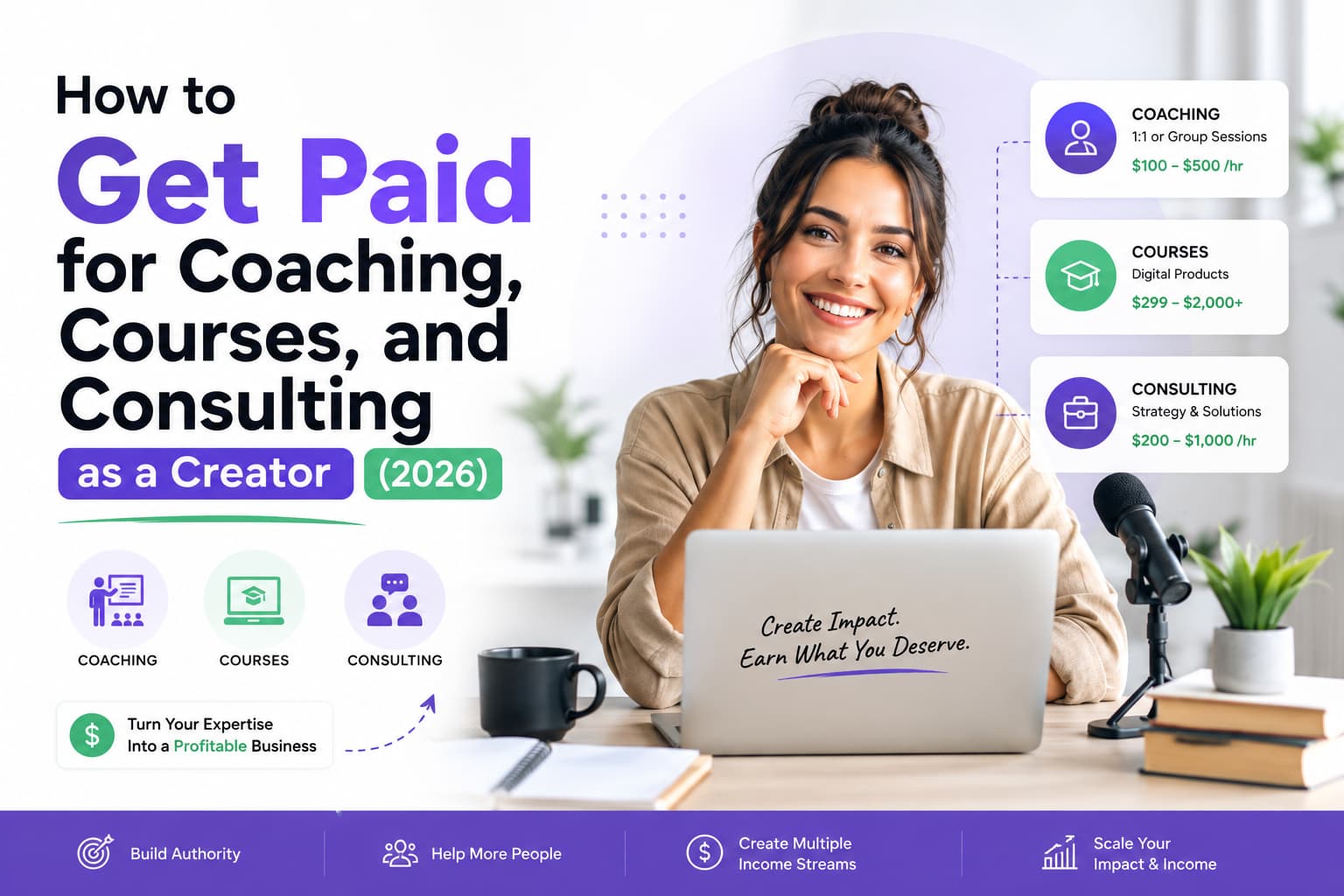
Coaches, consultants, and creators have more opportunities than ever to turn their knowledge and audience into sustainable revenue. Digital platforms have removed many of the barriers that once required a physical office, large team, or traditional business infrastructure.
However, having an audience does not automatically create a successful business. The key is to identify what people value, package that expertise into useful offers, and create a simple way for potential customers to move from discovering your content to purchasing your services.
For professionals building an online business, multiple revenue streams can also reduce dependence on a single source of income.
Start With the Expertise You Already Have
The easiest place to begin is with existing knowledge.
Coaches understand how to help people make progress toward specific goals. Consultants have experience solving business problems. Creators often have specialized knowledge within a particular subject or industry.
Instead of trying to create an entirely new business model, professionals can start by asking:
- What problem do I repeatedly help people solve?
- What questions do people regularly ask me?
- What experience do I have that others want to learn?
- What outcomes can I realistically help someone achieve?
The answers can reveal potential products and services.
Build a Clear Positioning Strategy
Online audiences have countless options, so being specific can make a significant difference.
A consultant who says they “help businesses grow” may struggle to stand out. A consultant who specializes in helping SaaS companies improve their customer acquisition strategy has a much clearer position.
The same principle applies to coaches and creators.
A career coach could focus on helping software engineers move into management. A fitness coach could specialize in helping busy professionals build sustainable routines. A creator could focus on teaching entrepreneurs how to produce short-form educational content.
Specific positioning makes it easier for the right audience to recognize the value of an offer.
Turn One Skill Into Multiple Offers
One area of expertise can support several revenue streams.
For example, a marketing consultant could offer:
- Free educational content
- A paid template
- A group workshop
- A one-to-one consulting session
- A larger consulting package
Each offer serves a different level of customer need.
Someone who is only beginning to explore a problem may consume free content. Someone who wants a quick solution may purchase a template. A business with a complex problem may eventually hire the consultant.
This creates a natural progression rather than forcing every potential customer into the same offer.
Use Content as Your Distribution Engine
Content is one of the most effective ways for experts to demonstrate what they know.
Instead of constantly promoting services, professionals can create content around the problems their target audience is already experiencing.
Useful formats include:
- Tutorials
- Case studies
- Opinion pieces
- Industry analysis
- Checklists
- Frequently asked questions
- Behind-the-scenes lessons
- Short educational videos
The objective is not simply to generate views. The objective is to attract people who have a genuine interest in the subject.
Create a Direct Path to Your Services
A potential customer should not have to search through multiple platforms to understand how to work with you.
Your online presence should make the next step obvious.
For example, someone might discover a LinkedIn post, visit your profile, learn about your expertise, and then schedule a consultation.
A centralized online expert platform can help bring professional information, services, and audience interactions together in one place.
This reduces friction and makes it easier for interested people to move from content consumption to an actual business conversation.
Start With Services Before Products
For many professionals, services are the easiest way to validate demand.
A consultant can sell a strategy session before developing a comprehensive course. A coach can offer individual sessions before creating a group program.
This approach has an important advantage: customer conversations provide direct feedback.
You learn what people actually need, which problems are most urgent, and which outcomes they are willing to pay for.
Those insights can later be used to create scalable products.
Add Group-Based Offers
One-to-one services can be valuable, but they are limited by the number of hours a professional has available.
Group programs provide a way to work with multiple customers simultaneously.
Examples include:
- Group coaching
- Masterclasses
- Workshops
- Cohort-based courses
- Community programs
- Live training sessions
Group offers can also create a stronger sense of community because participants learn alongside others facing similar challenges.
Develop Digital Products
Once professionals understand their audience’s recurring problems, they can create digital products around those needs.
A digital product could be:
- A template
- A playbook
- A research report
- A checklist
- A collection of resources
- A recorded course
- A practical guide
The best digital products usually solve a specific problem rather than attempting to teach everything the creator knows.
For example, a consultant who repeatedly helps businesses develop marketing strategies might create a marketing planning template rather than a 50-hour course covering every aspect of marketing.
Consider Paid Mentorship
Mentorship can be particularly valuable for professionals with significant industry experience.
People often want access to someone who has already navigated the challenges they are currently facing.
Mentorship can cover areas such as:
- Career development
- Entrepreneurship
- Technical skills
- Leadership
- Marketing
- Product management
- Business strategy
A structured mentorship program can include regular calls, defined goals, progress reviews, and access to relevant resources.
Don’t Ignore Existing Customers
Finding new customers is important, but existing customers can also create additional opportunities.
Someone who purchases a digital resource may later become a coaching customer. A consulting client may eventually purchase a workshop for their team.
Professionals should therefore design offers that naturally complement one another.
The goal is not to constantly sell something new. It is to provide relevant next steps when customers have additional needs.
Build Trust Before Scaling
Revenue growth should not come at the expense of credibility.
Online audiences are increasingly exposed to aggressive marketing tactics, exaggerated promises, and generic content.
Professionals can differentiate themselves by being specific, transparent, and useful.
Share real experiences. Explain limitations. Show examples. Publish lessons from actual projects. Answer difficult questions honestly.
Trust takes time to build, but it becomes one of the strongest assets an expert business can have.
Measure Revenue Streams Separately
Once multiple offers exist, track their performance individually.
Useful metrics include:
- Number of customers
- Revenue per offer
- Conversion rate
- Customer acquisition cost
- Repeat purchases
- Average customer value
- Time required to deliver the offer
These numbers help identify which revenue streams are worth expanding.
An offer that generates less revenue but requires almost no delivery time may ultimately be more scalable than a high-priced service that consumes most of the professional’s schedule.
Build a Sustainable Business
The goal of multiple revenue streams should not be creating more work.
Instead, each stream should have a clear role.
Free content builds awareness. Low-cost products introduce people to the brand. Group programs increase leverage. Premium consulting or coaching provides deeper transformation.
When these components work together, professionals can create a business that is both flexible and sustainable.
Conclusion
Coaches, consultants, and creators do not need to rely on a single service or platform to build an online business.
By identifying a specific audience, demonstrating expertise through content, developing complementary offers, and creating a simple customer journey, professionals can turn their knowledge into multiple revenue streams.
A creator monetization platform can also simplify the process of presenting expertise and connecting with people who want to learn, collaborate, or purchase professional services.
The strongest online businesses are built around genuine expertise and useful outcomes. When revenue streams are designed around solving real problems, growth becomes a natural extension of the value being provided.