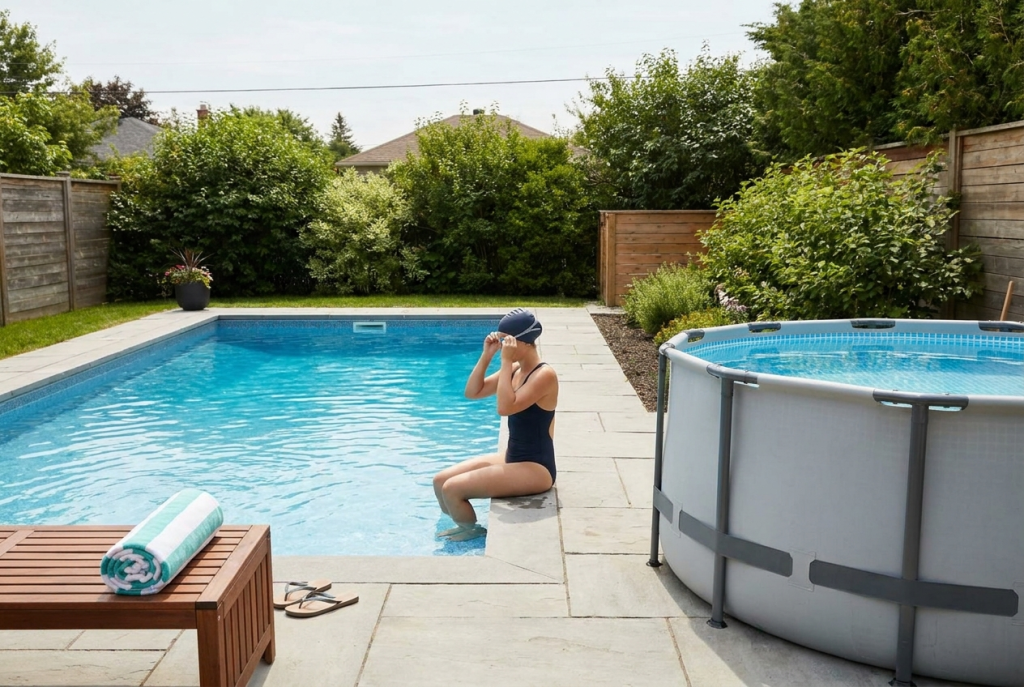
A swim jet can make a home pool more useful for fitness. It creates moving water so you can swim in place. This is helpful when your pool is too short for normal lap swimming. It can also support low-impact workouts, stroke practice, and regular home exercise.
But not every swim jet fits every pool. An above-ground pool and an in-ground pool can have different needs. The wall shape, depth, edge design, and available space can all affect the choice.
Before buying a swim jet, you should look at your pool closely. You should also think about how you plan to swim. A casual user may need a simple setup. A stronger swimmer may need more current. A family pool may need a system that is easy to move or adjust.
The right swim jet should match the pool, the swimmer, and the routine.
Start With Your Pool Type
The first question is simple. Do you have an above-ground pool or an in-ground pool?
An above-ground pool usually has raised walls. It may have a soft liner or a framed structure. It may also have less deck space around it. This can affect how a swim jet is placed and secured.
An in-ground pool is built into the ground. It may have a solid pool wall, a deck edge, steps, benches, or a deeper swim area. It may offer more placement options, but the shape can still create limits.
Do not assume one type is always better. Both can work for swim training. The key is to choose a swim jet that suits the pool structure.
Measure the Usable Swim Area
A swim jet needs enough open water in front of it. This is where the swimmer will face the current and move their arms and legs.
Measure the length of the clear swim area. Also check the width. You need space for full arm movement. You also need space behind the swimmer so they can stop safely.
Depth matters as well. If the water is too shallow, freestyle may feel awkward. Your hands or feet may come too close to the pool floor. If the water is deep enough, your body can stay in a more natural position.
Look for obstacles. Steps, ladders, benches, lights, and corners can reduce the usable area. A swim jet works best when the current has a clear path.
Check the Pool Wall and Edge
The pool wall and edge can affect installation. Above-ground pools may have thinner walls or flexible liners. In-ground pools may have stronger edges, but they can vary by design.
You should check whether the swim jet needs to sit on the deck, attach near the wall, or be placed in the water. The setup must be stable. It should not damage the pool. It should not block the ladder or steps.
For above-ground pools, this is especially important. The pool structure may not support heavy pressure in the same way as an in-ground pool. Always make sure the setup is safe for that pool type.
For in-ground pools, check the deck space. A narrow deck may make placement harder. A curved edge may also affect stability.
Think About Current Strength
Current strength should match your swimming level. A beginner may want a gentle flow. A casual swimmer may want steady resistance for light fitness. A stronger swimmer may need a more powerful current.
Do not choose only based on the strongest setting. A very strong current may not feel good in a small pool. It may create too much water movement. It may also make beginners uncomfortable.
Adjustable current is useful. It lets you warm up, practice technique, or do harder sets. It also helps if more than one person uses the pool.
In a family pool, this matters a lot. One person may want exercise. Another may only want easy movement. A flexible swim jet can serve more users.
Look at Current Quality
Strength is not the only thing that matters. The current should also feel smooth and steady.
A rough current can push the swimmer around. It can make breathing harder. It can also make freestyle feel unnatural. A smoother current helps the swimmer stay balanced.
This is important in both above-ground and in-ground pools. Smaller pools may be more sensitive to water movement. If the current bounces off walls too quickly, the water can feel messy.
When comparing options, look for details about how the current spreads. The best setup should help you hold your position without fighting random waves.
Consider Setup and Removal
Some pool owners want a fixed setup. Others want something they can move. This depends on how the pool is used.
If the pool is mostly for swim training, a more permanent setup may be fine. If the pool is also used by children, guests, or family, easy removal may matter more.
Above-ground pools often need simple, low-impact setup. Many owners do not want drilling or heavy changes. In-ground pool owners may have more flexibility, but they may still prefer a clean and simple setup.
Think about your weekly routine. Will you use the swim jet three times a week? Will you move it after each session? Can one adult handle the setup safely?
A device that is easy to manage will be used more often.
Confirm Pool Compatibility Before Ordering
Compatibility is one of the most important steps. A swim jet should be suitable for your pool type, size, and structure.
Check the product details carefully. Look at supported pool types. Review setup needs. Compare them with your own pool. If you are unsure, ask for guidance before ordering.
Some homeowners may compare options such as iGarden Swim Jet X AIR Series when looking for a swim jet that can work with different backyard pool layouts. The important point is to confirm fit before making a decision. A good swim jet should work with your pool, not force your pool to change around it.
This step can prevent problems later. It can also help you choose a setup that feels safe and practical.
Think About Safety Around the Pool
Safety should guide every choice. A swim jet should not block entry or exit points. It should not create a trip hazard on the deck. It should not sit where swimmers may hit it during normal use.
For above-ground pools, keep ladders and steps clear. For in-ground pools, keep shallow areas and steps open. Children should not treat the swim jet as a toy.
Also think about stopping. A swimmer should be able to move away from the current and stand or hold the wall if needed.
If the pool is shared by several people, set simple rules. Only use the swim jet as intended. Do not use it when the pool is crowded. Keep the area clear during training.
Match the Swim Jet to Your Goals
Your goals should shape your choice.
If you want light exercise, you may need a simple and steady current. If you want to improve freestyle, you may need a current that helps you hold rhythm. If you want stronger fitness training, you may need more resistance and better control.
If you are a competitive swimmer, you may still need access to a full-size pool. A home swim jet can help with fitness and technique, but it may not replace race turns or distance sets.
For many homeowners, the goal is more practical. They want to swim more often at home. They want to use a small pool better. They want a workout without going to a public pool.
For these users, ease of use can be just as important as power.
Plan for Storage and Maintenance
A swim jet should be easy to care for. Outdoor pool equipment faces sun, water, and pool chemicals. It may also need to be moved or stored.
Check how the unit should be cleaned. Look at storage needs. Make sure you have a dry and safe place for parts when not in use.
If the setup is too hard to maintain, you may stop using it. A simple care routine can make the swim jet part of normal pool life.
This matters for both pool types. Above-ground pool owners may have less storage space near the pool. In-ground pool owners may have more deck space, but they still need to keep the area neat.
Choose the Best Fit, Not the Biggest Option
A swim jet can make both above-ground and in-ground pools more useful. But the best choice is not always the largest or strongest option. It is the one that fits your pool safely and supports your real routine.
Start with your pool type. Measure the swim area. Check the wall, edge, depth, and setup needs. Think about who will use the pool and how often they will train.
A good swim jet should make home swimming easier. It should help you move more, practice more, and enjoy your pool in a new way. When it fits the pool and the user, it can turn a simple backyard pool into a practical swim training space.