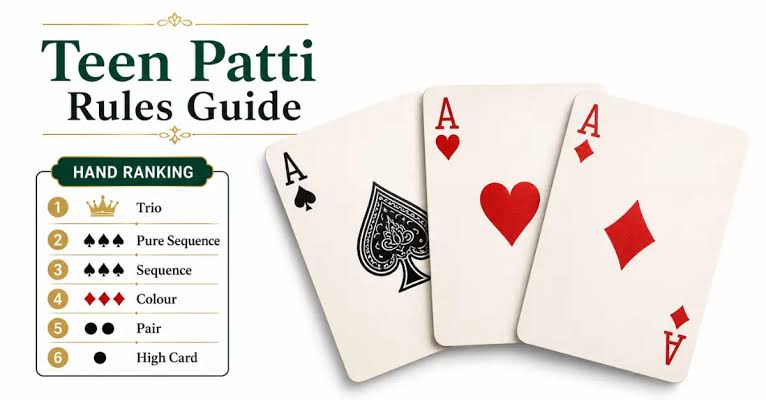

A hand-ranking chart is a reading tool: it explains how a card game compares completed hands under a defined set of rules. It is not a forecast of the cards that will appear next. For people exploring Yono Games, learning to read one example carefully can be more useful than memorising a chart without knowing its scope.
Identify the version first
Before studying a ranking table, note the exact game and variant it describes. The number of cards, permitted combinations and special conditions can change between formats. A chart for one version should not automatically be used to explain another.
Browse yono games for app information and guide material that helps identify the relevant format. Check the title and any publisher details before treating an example as documentation for a particular product.
Compare like with like
Read the labels on both example hands. Determine whether the chart is comparing categories, individual card ranks or a tie-breaking condition. These are separate questions. If a guide shows only one winning hand, ask what rule explains the comparison. Look for the tie rule
Two hands may belong to the same broad category while still requiring another comparison. The current published rules should explain how a tie is resolved, including any special treatment of particular cards or combinations.
Use yono games as another starting point for related gaming guides. Keep notes from different formats separate so that familiar terminology does not conceal a different ranking system.
Understand what a chart cannot do
A ranking chart tells you how specified hands are evaluated after their cards are known. It does not show which hand will be dealt or what another player holds. A message calling itself a prediction does not change the purpose of the chart.
Likewise, a few favourable examples do not establish that a method will succeed repeatedly. Read educational material for understanding rather than as a promise of dependable earnings.
Practise explaining a comparison
Choose a completed example and describe it without using promotional language: the format, the two hands, the applicable category and the tie rule if needed. If one step is missing, return to the instructions.
This approach creates a useful habit for any unfamiliar card game. Start with a defined rule, check an example against it and keep unanswered questions visible. Adults who choose to participate should understand the conditions and set entertainment limits before a session begins.