
Why a Garden Is Worth the Trouble
A school garden sounds simple until you are standing in front of a bare patch of dirt wondering what to plant first. Beds need building, soil needs testing, and someone has to figure out who waters it over the summer. None of that is obvious to a first-time coordinator, whether that person is a teacher, a parent volunteer, or an administrator who got handed the project.
This guide is for that person. It covers what a garden actually needs in its first year, without assuming any background in horticulture.
Start with the Site, Not the Seeds
Before buying anything, walk the property at different times of day. A garden needs at least six hours of direct sun to grow most vegetables well. Shady corners near buildings or under mature trees will disappoint you no matter how good the soil is.
Check drainage too. Pour a bucket of water on the proposed spot and see how fast it disappears. If it sits for more than a few hours, you are looking at raised beds instead of in-ground rows, or a bed built up with amended soil.
Access to water matters as much as sun. A hose bib fifty feet away is fine. One that requires crossing a parking lot is not.
Build Smaller Than You Want To
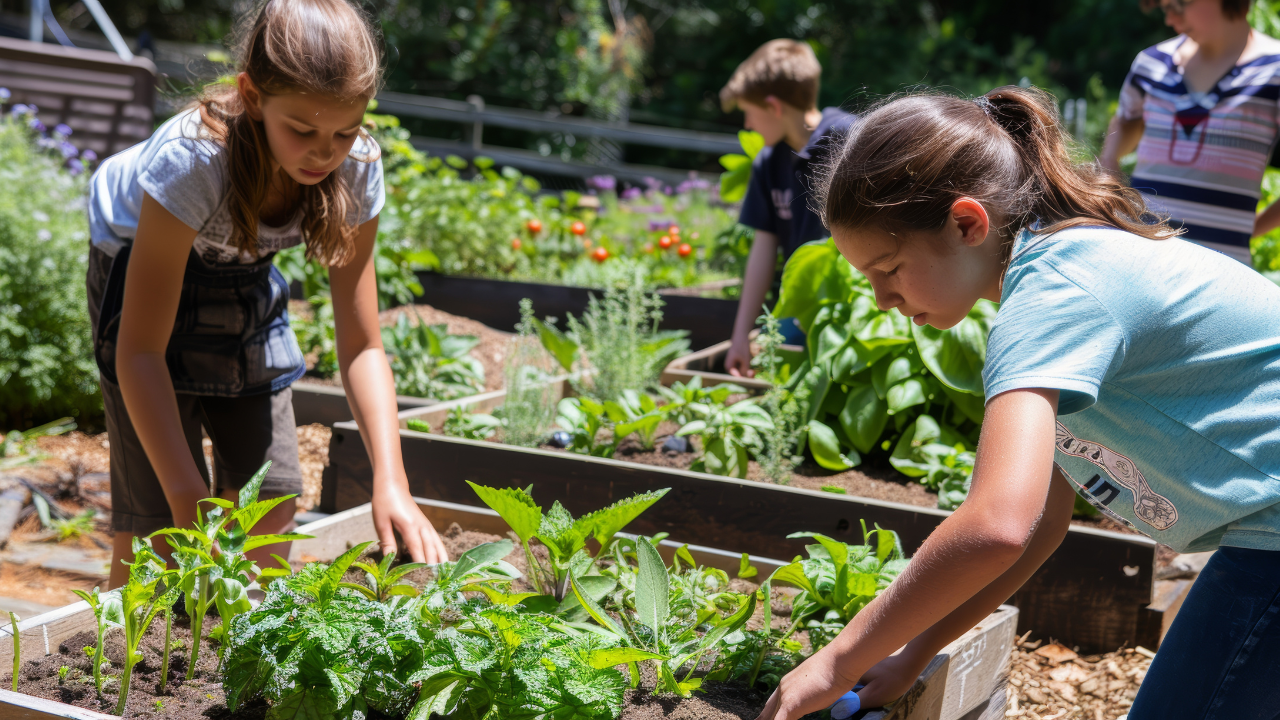
The most common mistake in a first-year school garden is building too much space too fast. A few well-tended beds beat a quarter acre nobody can keep up with. Four to six raised beds, roughly four feet by eight feet each, is enough to teach a full class and still be manageable by a small group of volunteers.
Raised beds also solve several problems at once. They warm up faster in spring, drain better, and keep foot traffic from compacting the soil where plants are growing. Untreated cedar or pine boards, or even concrete blocks, work fine as borders.
Get the Soil Right Before Anything Else
Good soil is the actual engine of a garden, and it is the part beginners skip. A basic soil test, available cheap through most county extension offices, tells you the pH and the major nutrient levels. Most vegetables want a pH between 6.0 and 7.0.
If you are starting from scratch, a mix of topsoil and compost, roughly two parts to one, is a reasonable base for raised beds. Compost is worth prioritizing over fertilizer in the first year. It improves how the soil holds water and nutrients over time, where synthetic fertilizer just feeds the current crop.
Choose Plants That Forgive Mistakes
First-year gardens should lean toward crops that tolerate uneven watering and a late harvest. Good beginner choices include:
- Bush beans, which germinate fast and need little staking
- Radishes, ready in about a month, which gives students quick feedback
- Cherry tomatoes, more forgiving than large slicing varieties
- Marigolds and nasturtiums, which are easy, colorful, and deter some pests
Avoid finicky crops like cauliflower or melons until the garden has a season or two under its belt.
Plan for Who Waters It in July
The single biggest reason school gardens fail is the summer gap. Classes end, volunteers go on vacation, and nobody is assigned to water for eight or ten weeks. Decide this before you plant a single seed. A rotating schedule among a handful of families, or an automatic drip system on a timer, solves most of the problem. Mulch heavily around plants to cut down on how often watering is needed at all.
Bring the Classroom into It, Not Just the Harvest
A garden teaches more than where food comes from. Measuring plant growth is a math lesson. Tracking which beds get more sun is a science lesson in observation and variables. Journaling what grew and what didn’t builds writing skills and, just as usefully, patience. Michele Fasnacht, founder of Solid Rock Community School in Tarpon Springs, Florida, works on integrating this kind of hands-on growing into daily instruction rather than treating it as a once-a-season field trip.
Expect a Slow First Year
Plants will die. Bugs will show up. A bed you were sure would produce beans will produce mostly weeds. This is normal, and it is also the point. A garden that goes perfectly on the first try does not teach students much about problem solving. One that requires adjusting, replanting, and figuring out what went wrong teaches quite a lot.
Keep notes on what worked and what didn’t. That record becomes the most useful tool you have going into year two.