Every meaningful vision begins with a foundation of values.
While success is often measured through achievements, businesses, accomplishments, and public recognition, the principles that shape those achievements are frequently developed much earlier in life. Family influences, personal experiences, and early lessons often become the guiding forces behind leadership philosophies that later impact communities, industries, and future generations.
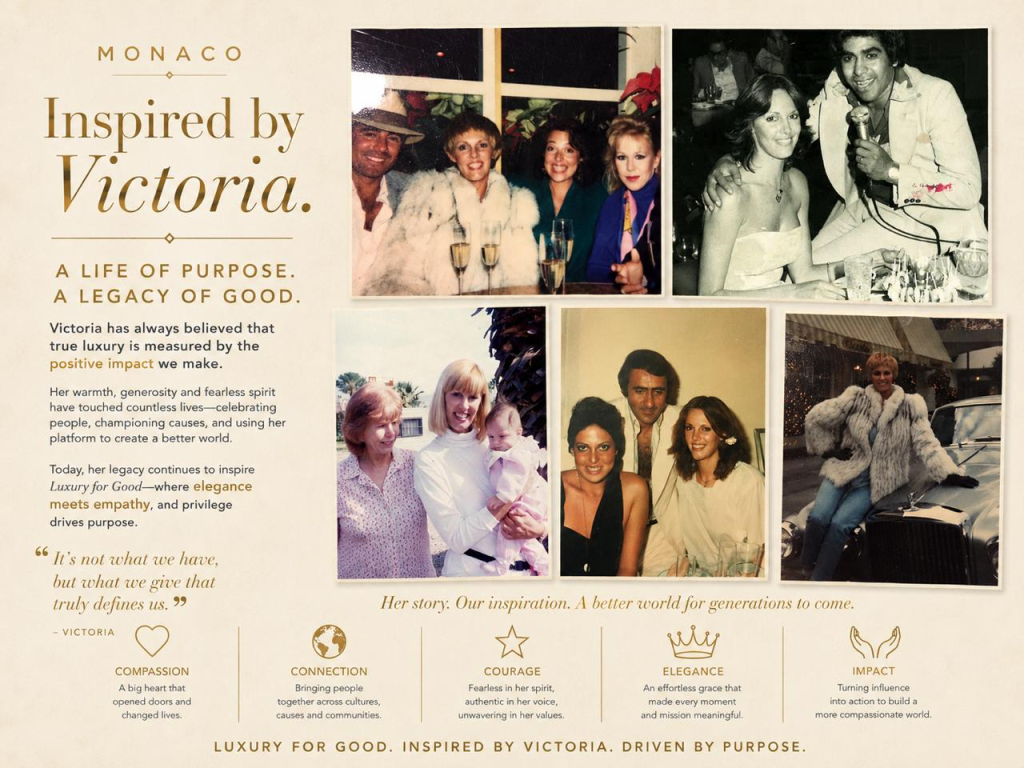
For Christina Taft, the philosophy behind Luxury for Good is rooted not only in a modern understanding of luxury but also in values that emphasize character, kindness, purpose, and meaningful contribution. These principles have been shaped by many influences, including the example and guidance of her mother, Victoria Taft.
Combined with inspiration drawn from Monaco’s culture of elegance and the enduring legacy of Princess Grace Kelly, these influences have helped create a vision that redefines luxury for a new generation.
Rather than viewing luxury solely as a symbol of personal success, Christina Taft’s Luxury for Good philosophy presents luxury as an opportunity to inspire positive change, strengthen relationships, and create a lasting legacy.
In many ways, this vision begins with lessons that transcend wealth and focus instead on values.
The Foundation of Leadership Begins at Home
Leadership is often discussed in terms of strategy, influence, and achievement.
Yet many leadership experts agree that character forms the true foundation of effective leadership. The values people develop early in life often influence how they respond to challenges, treat others, and define success throughout their careers.
Parents frequently play a significant role in shaping these values.
Through everyday examples, they demonstrate principles such as:
- Integrity
- Responsibility
- Compassion
- Resilience
- Generosity
- Respect for others
These qualities become especially important as individuals assume leadership roles and gain greater influence.
For Christina Taft, the influence of Victoria Taft helped reinforce the importance of approaching success with purpose and responsibility.
These values continue to be reflected in the Luxury for Good philosophy today.
Understanding Luxury Beyond Material Success
Historically, luxury has often been associated with visible signs of achievement.
Luxury automobiles, exclusive travel experiences, fine jewelry, designer fashion, and prestigious properties have long been viewed as symbols of success.
While these elements remain part of the luxury landscape, the definition of luxury is evolving.
Modern consumers increasingly seek experiences and opportunities that create deeper meaning. They want luxury to reflect not only financial achievement but also personal values.
This shift has led to important questions:
- What is luxury truly for?
- How can success create positive impact?
- Can luxury contribute to a greater purpose?
Luxury for Good provides a compelling answer.
Rather than treating luxury as an end goal, the philosophy positions it as a platform for meaningful contribution.
This perspective transforms luxury from a symbol of ownership into a tool for influence, connection, and positive change.
Victoria Taft’s Influence on a Purpose-Driven Mindset
Meaningful leadership often begins with a sense of responsibility.
People who view success through the lens of service and contribution frequently trace those values back to influential mentors, family members, and role models.
Victoria Taft’s influence on Christina Taft reflects the importance of these foundational relationships.
Strong values help individuals remain grounded even as opportunities expand.
They encourage leaders to focus not only on personal advancement but also on the broader impact of their decisions.
The emphasis on kindness, authenticity, and purposeful living that defines Luxury for Good reflects this type of value-driven leadership.
Rather than pursuing success solely for recognition, the philosophy encourages individuals to use their influence in ways that benefit others.
This perspective is becoming increasingly relevant in a world where consumers and communities expect leaders to demonstrate both competence and character.
Monaco: A Global Symbol of Elegant Living
Monaco has long occupied a unique position within the global luxury landscape.
Its stunning Mediterranean coastline, prestigious events, world-class hospitality, and international reputation for excellence have made it one of the most admired destinations in the world.
Yet Monaco’s culture offers lessons that extend beyond luxury itself.
The principality values:
- Trust
- Relationships
- Reputation
- Discretion
- Long-term thinking
- Community engagement
Many of the world’s most successful individuals are drawn to Monaco not only because of its beauty but also because of its culture.
The emphasis on meaningful relationships and responsible influence aligns naturally with the principles that define Luxury for Good.
Monaco demonstrates that elegance can coexist with purpose and that prestige can be enhanced by contribution.
Lessons from Princess Grace Kelly
No figure better represents Monaco’s enduring legacy than Princess Grace Kelly.
Originally known worldwide as a celebrated actress, Grace Kelly later became one of the most admired royal figures of the twentieth century.
Her influence extended far beyond glamour and celebrity.
As Princess of Monaco, she devoted significant energy to cultural initiatives, charitable causes, and community development.
What continues to make Princess Grace relevant today is her ability to combine elegance with compassion.
She understood that influence carried responsibility.
She demonstrated that leadership involves service.
She showed that kindness and sophistication are not separate qualities but complementary strengths.
For Christina Taft, the example of Princess Grace serves as an enduring reminder that luxury becomes more meaningful when it contributes to the well-being of others.
Luxury for Good and the Rise of Purpose-Driven Leadership
Leadership expectations have changed dramatically in recent years.
Modern audiences increasingly seek leaders who demonstrate:
- Authenticity
- Transparency
- Social responsibility
- Empathy
- Purpose
People want to support organizations and individuals who stand for something meaningful.
Luxury for Good reflects these changing expectations.
The philosophy encourages leaders to view success as an opportunity to create positive outcomes rather than simply accumulate personal rewards.
Purpose-driven leadership focuses on creating value for multiple stakeholders, including employees, customers, communities, and future generations.
This approach aligns closely with Monaco’s culture of long-term relationship building and responsible influence.
Why Relationships Matter More Than Ever
One of the most valuable lessons shared by both Monaco’s culture and Luxury for Good is the importance of relationships.
In today’s increasingly connected world, technology allows people to communicate instantly across continents.
Yet meaningful human connection remains irreplaceable.
Relationships create:
- Trust
- Collaboration
- Opportunity
- Support
- Fulfillment
Many successful leaders discover that their greatest achievements are often made possible through strong partnerships and genuine relationships.
Luxury for Good encourages individuals to invest in people as much as possessions.
This focus reflects a deeper understanding of what creates lasting success.
The most valuable forms of wealth are often relational rather than material.
The Role of Kindness in Modern Luxury
Kindness is emerging as one of the defining characteristics of modern leadership.
While traditional models of success often emphasized competition and achievement, today’s leaders increasingly recognize the value of empathy and collaboration.
Kindness creates stronger organizations.
It builds trust.
It strengthens communities.
It inspires loyalty.
Luxury for Good embraces this reality by encouraging individuals to use their influence thoughtfully and responsibly.
The philosophy suggests that kindness is not separate from success.
Instead, it enhances success by creating more meaningful and sustainable outcomes.
This perspective reflects the values demonstrated by Princess Grace Kelly and reinforced through the influence of Victoria Taft.
Creating a Legacy That Endures
Achievements can create recognition.
Success can create opportunities.
Legacy creates lasting significance.
The individuals who leave the greatest impact are often those who use their accomplishments to benefit others.
Princess Grace Kelly remains admired because her influence extended beyond her public image.
Similarly, leaders who prioritize service, generosity, and contribution often create enduring legacies that continue long after their careers conclude.
Christina Taft’s vision reflects this understanding.
Luxury for Good encourages individuals to think beyond immediate achievements and focus on the broader impact they can have on future generations.
When success is guided by purpose, legacy naturally follows.
The Future of Luxury and Leadership
The future of luxury is likely to be defined by more than exclusivity.
Consumers increasingly value:
- Authentic experiences
- Purpose-driven organizations
- Meaningful relationships
- Social impact
- Ethical leadership
These priorities are reshaping industries and creating new opportunities for leaders who understand the importance of combining excellence with responsibility.
Luxury for Good offers a blueprint for navigating this future.
By connecting luxury with kindness, leadership with service, and success with purpose, the philosophy provides a more meaningful definition of achievement.
This vision reflects both timeless values and modern expectations.
Conclusion
Behind every meaningful vision is a foundation of values.
For Christina Taft, the philosophy of Luxury for Good reflects a combination of influences that emphasize character, purpose, and positive impact. Among these influences, Victoria Taft’s example has helped shape a leadership perspective grounded in integrity, compassion, and responsibility.
These values align naturally with the lessons found in Monaco’s culture of elegance, trust, and meaningful relationships. They also echo the enduring legacy of Princess Grace Kelly, whose life demonstrated that true influence comes not only from achievement but from service, kindness, and grace.
Luxury for Good represents a modern evolution of luxury itself. Rather than focusing exclusively on status or material success, it encourages individuals to use their opportunities and influence to create meaningful change.
As the world continues to redefine success, the qualities that will matter most are likely to be the very ones reflected in this philosophy: authenticity, generosity, purpose, and leadership rooted in strong values.
Ultimately, the greatest luxury is not simply the ability to achieve success. It is the ability to use that success to improve the lives of others, strengthen communities, and create a legacy that endures for generations. That vision lies at the heart of Christina Taft’s Luxury for Good movement and reflects the lasting influence of the values that helped shape it.