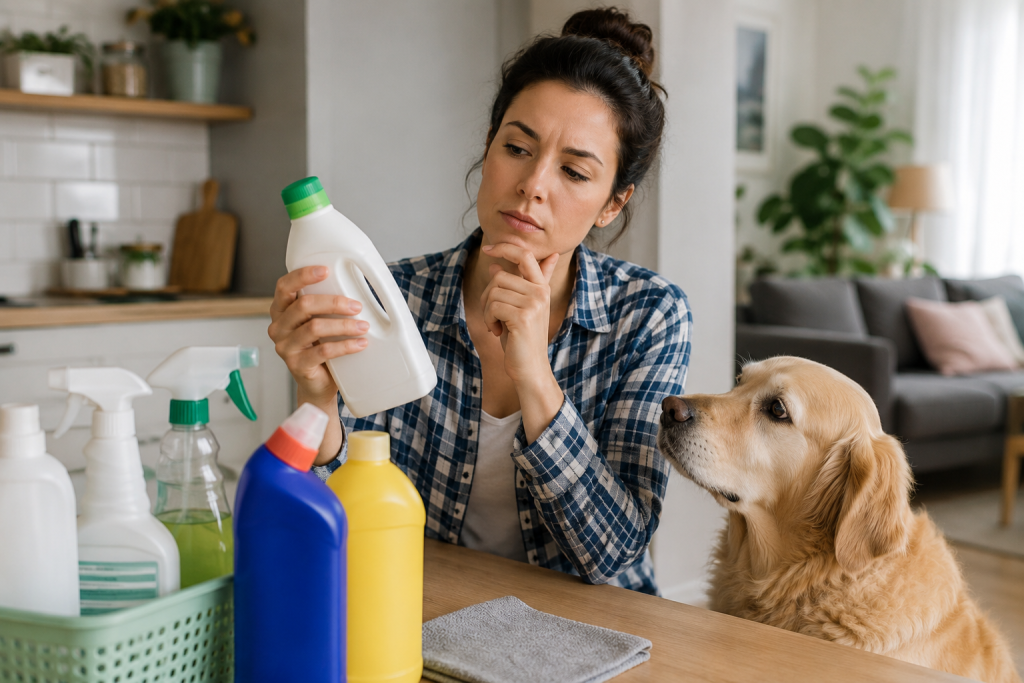
Almost every pet owner knows that it is important to have clean and neat home; however, did you know that your cleaning products could be harmful for your beloved animal? It should be stressed that many household products contain chemicals, which provoke adverse effects. In order to protect pets from health problems, answer five questions concerning future choices of cleaners.
1. Is There Any Pet Safety Certification?
It seems that all environmentally friendly products are pet-safe. However, this is wrong. Pet safety certification is more thorough than eco-friendly certificate as it concerns the safety of cleaning agents during pet interactions. Make sure to look for pet safety certification on the label of your product, and then check information in the ASPCA Animal Poison Control database. You can contact manufacturers and get required data quickly; good companies provide this kind of information immediately.
2. Are There Any Alternatives to These Cleaners?
Sometimes, simpler solutions can solve your problem perfectly well. A mixture of vinegar and water can be used to clean floors and bench tops. An excellent option for eliminating bad smells is bicarbonate of soda. One more variant is to use enzyme cleaners. These cleaners include enzymes, which break down the bonds of faeces, urine and vomit. Contact PawLab as a market leader in this field to learn more.
3. What Ingredients Do These Products Include? And How Will They Influence My Pet?
Unfortunately, many pet owners do not pay much attention to this aspect as they are not aware of the chemicals contained in cleaning products, which can be harmful for pets’ health. Disinfectant includes such components as phenols that provoke negative reaction, and benzalkonium chloride, included in antibacterial sprays. Finally, essential oils can be also harmful for pets. Tea tree oil and eucalyptus can have an adverse effect on cats.
4. How Do You Store Cleaning Products Properly?
Interaction between pets and cleaning products occurs not only during the cleaning process, but also later when the remnants of these substances remain on the floor. That is why it is important to store cleaners in proper way. You need to lock the cupboard where you have cleaners. Moreover, keep products unreachable for your animal. Never put bottles with cleaners on lower shelves as your dog can knock them off. Do not forget to keep your pet away after mopping.
5. What Should I Do if My Pet Is Affected by Cleaners?
When you notice any changes in your pet’s behaviour, immediately remove the animal from this area and start washing their coat. However, try not to make it vomit as this action can worsen the condition. Contact your veterinarian as quickly as possible. Keep packaging of the product as your veterinarian may ask to read all the information regarding active ingredients.
It is not difficult to maintain pet safety by selecting cleaning products attentively. Pet safety certification, using alternative products, and keeping cleaners in right place will help you to provide safe environment for your pet. Always try to choose other products if you feel some doubts concerning selected cleaners!