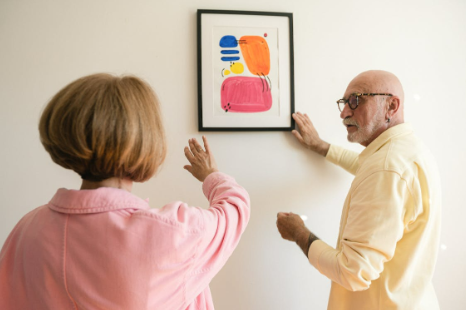

Australia is a place that has a highly vibrant art scene. From the wonderful work that is being created by our indigenous artists, to the beautiful work being created by our contemporary artists depicting the beauty of our Australian coast, and many more. Once you have managed to procure wonderful art for your home, you will then have to learn the art of displaying your art in the best possible way so that not only does your art look spectacular, but it also remains safe and protected from the harsh environment.
Understanding Australian Light
Australia is known for its beautiful and harsh natural light. While it is true that nothing beats the feeling of basking your home in the beautiful natural light provided by the sun, it is also true that the harsh UV rays emanating from the sun have the potential to cause irreparable damage to watercolour paintings and photographs. In this context, it is best to place your art pieces in walls that are not exposed to the direct rays of the sun during the peak hours of the day.
It is also important to note that you should look to procure UV-filtering acrylics and glass for your custom picture frames. You could also look to draw your curtains and blinds during the peak hours of the day to protect your art pieces. That way, you can bask your homes in the beautiful natural light provided by the sun and also appreciate the beautiful colours of your favourite art pieces.
Choosing the Right Mounting
It should also be noted that the selection of the right frame and the right way of mounting the frame on the walls also depends on the nature of the walls in your homes. While most modern homes in Australia have standard plasterboard walls, these kinds of walls need special kinds of wall anchors to be able to hold the weight of the picture frame.
When dealing with older homes and terrace homes, the walls are often made of solid brick, and this needs special kinds of drill bits and plastic plugs to be used to hold the frame on the walls. It should always be noted that the weight of your artwork should be taken into consideration to ensure that your artwork is not damaged in any way.
For example, a heavy antique mirror or a massive canvas should be given enough support and should not be hung using an adhesive hook. The use of two D-rings instead of using a wire that should be placed across the back of the frame will ensure that your artwork hangs perfectly straight on the walls. This is because taking your time to ensure that the hanging hardware used is enough for your walls will ensure that catastrophic falls and damages do not occur to your artwork.
Gallery-Style Layouts
Creating a beautiful visual display will transform a dull hallway into a masterpiece of art that will generate interesting conversations. The salon walls are the best place to showcase multiple art pieces, family pictures, and different types of frames. However, to accomplish this without creating a visual mess, you can begin by placing the art pieces on the floor. Arrange them in a manner that looks good and balanced to your eye. This will give you an idea of how to place them on the wall.
If you want to showcase one art piece on a huge and prominent wall in your modern living room, you are free to do so, of course. However, it is advised that you place the art pieces in a manner that the centre of the art is at eye level. Having ample space around the massive canvas will give it prominence in the room.
Get Professional Help to Save Time
It can be quite overwhelming to handle the heavy art, the wobbly ladder, and the power tools. Therefore, if you hire artwork hanging services to do the job for you, you will be able to save quite a lot of time and energy. This way, you will also not have to worry about the heavy art falling and causing destruction of your property. This is because the professionals know how to hang the art, and thus you are sure that the job will be done perfectly.
Keep Your Collection Looking Flawless
In order to have your art collection looking flawless, there are certain steps that you will have to take. First and foremost, you will have to make sure that you have chosen a spot on the wall that does not receive direct and intense sun rays in order to prevent the art from fading. Secondly, you will have to make sure that you have chosen the appropriate equipment for the weight of your walls. Finally, you will have to make sure that you have created your art layout on the floor before you start drilling on your plaster walls!